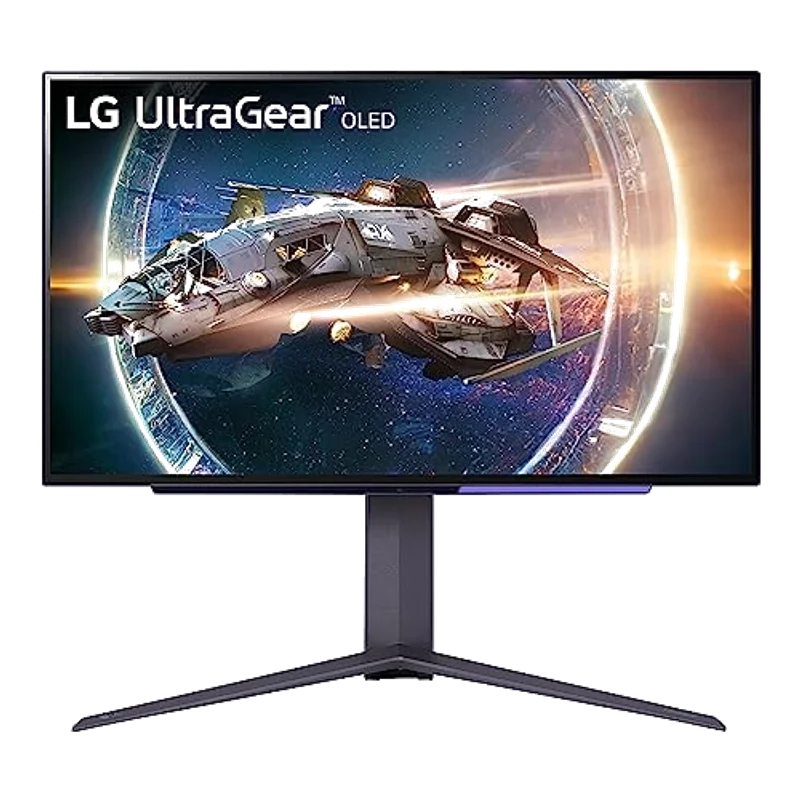
LG 27GR95QE
A proven 27" OLED gaming pick when Alienware stock/price is silly, same OLED caveats, slightly different stand/OSD personality.
Best 27-inch OLED Gaming Monitor?
Two 27-inch 1440p 240Hz OLED monitors go head-to-head. LG WOLED vs ASUS heatsink design. Which panel deserves your desk space?
A proven 27" OLED gaming pick when Alienware stock/price is silly, same OLED caveats, slightly different stand/OSD personality.

The 27-inch 1440p 240Hz OLED is the sweet spot for PC gaming in 2026. Two monitors dominate this category: the LG 27GR95QE and the ASUS PG27AQDM. Both use the same LG Display WOLED panel. The differences are firmware, cooling, and price — and those differences matter more than the spec sheet suggests.
Both monitors use the same LG Display WOLED panel. Resolution is 2560 x 1440. Refresh rate is 240Hz. Response time is 0.03ms grey-to-grey — effectively instantaneous. Colour gamut covers 98.5% DCI-P3 on both. The hardware is identical. What separates them is how each manufacturer tunes it.
The ASUS PG27AQDM pushes higher peak brightness in HDR — approximately 900 nits on a 2 percent window versus 750 nits on the LG. In practice, this means HDR highlights pop slightly more on the ASUS. In SDR — which is how most PC games are played — both monitors deliver roughly 250 nits full-screen, which is adequate for a dim room and underwhelming in direct sunlight.
Neither monitor is bright enough for a room with south-facing windows. If your desk sits opposite a window, buy an LCD with a matte coating and 400+ nits sustained brightness.
ASUS fitted a custom heatsink to the PG27AQDM. This was marketed as reducing burn-in risk. In reality, both monitors use the same panel with the same organic material degradation rate. The heatsink may slightly reduce peak temperatures during extended HDR sessions, but there is no independent data showing a meaningful burn-in advantage after two years of use. Do not choose based on burn-in fear — the 2-year warranty on both covers panel degradation.
At publication, the LG 27GR95QE is approximately 460 pounds. The ASUS PG27AQDM is approximately 750 pounds. That is a 290-pound difference for the same panel. The ASUS runs cooler and slightly brighter in HDR. The LG costs 40 percent less. For most buyers, that settles the question.
Buy the LG 27GR95QE — same panel, 40 percent cheaper. The 290-pound saving buys a better GPU or a second monitor. Buy the ASUS PG27AQDM only if you play primarily HDR content and the extra 150 nits of peak brightness matters to you.
A proven 27" OLED gaming pick when Alienware stock/price is silly — same OLED caveats, slightly different stand/OSD personality.
Strong motion and contrast praise. Themes: stand mediocrity (arm recommended), firmware quirks, and text clarity debates. UK availability via Amazon/Scan cycles.
| panel | OLED |
| size_in | 27 |
| resolution | 2560x1440 |
LG 27GR95QE is our pick (8.7/10) vs ASUS PG27AQDM at 8.5/10. Two 27-inch 1440p 240Hz OLED monitors go head-to-head. LG WOLED vs ASUS heatsink design. Which panel deserves your desk space?
Around £459.15 on Amazon UK at last check (13 July 2026). Confirm on the retailer — prices move.
Choose ASUS PG27AQDM if you prioritise value over the overall winner (about £747.53 UK). See the score breakdown and drawbacks in the article.
Performance 40%, value 25%, build 20%, ease of use 15% — out of 10. Rankings are never sold. Full detail on our methodology page.
New versus matchups, garage-gym / gaming-room kit alerts, and deal notes. One email a week.
One email per week. Confirmation page next. Unsubscribe any time. Privacy.
Prices checked via the Amazon Creators API and may since have changed. Affiliate disclosure · How we test