
Best Home Gym Flooring UK
Rubber, Foam & Interlocking Mats Compared Honestly
Which gym flooring actually protects your floor? We compare EVA foam, rubber crumb, and 20mm heavy rubber mats with real UK prices. Honest advice on thickness, smell, and what Reddit's home gym community recommends.
8.5Winner
versus 7.0Runner-up

Ark Mat 10mm Rubber Crumb Tiles
The Short Answer
For most UK home gyms, 15mm-20mm SBR rubber tiles are the best all-round choice. They protect your floor from dropped weights, reduce noise transfer to neighbours, and cost roughly £20-£40 per square metre. If you only do yoga and bodyweight work, EVA foam mats at £15-£25/m² will do the job. If you deadlift 200kg in a garage with a baby's nursery above, go straight to 20mm heavy rubber mats — your family will thank you.
1. Cost and Price — What You'll Actually Pay in the UK
Home gym flooring ranges from pocket-money cheap to "I should have just joined a gym" expensive. Here is what each type costs per square metre, including a typical 15m² garage gym setup:
| Product | Material | Thickness | Price per m² | 15m² Total | Best For |
|---|---|---|---|---|---|
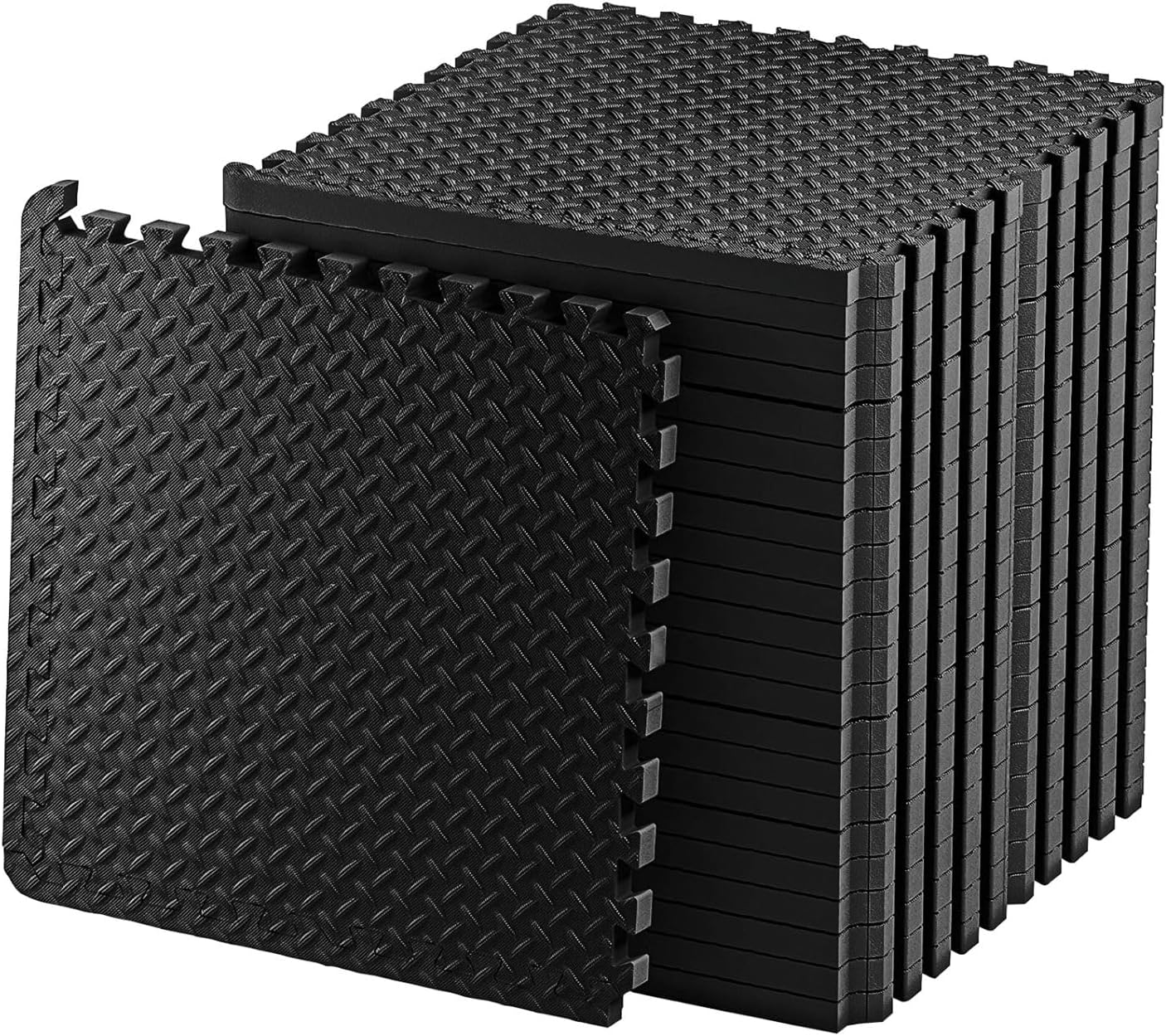
| EVA Foam Interlocking Mats | EVA foam | 10-12mm | £15-£25 | £60-£100 | Yoga, bodyweight, light cardio |
| Ark Mat Rubber Crumb Tiles | SBR rubber crumb | 10mm | £20 | £300 | General gym, moderate weights |
| Cannons UK 20mm Rubber Tiles | SBR rubber | 20mm | £30-£40 | £450-£600 | Heavy lifting, deadlifts, power racks |
| Cannons UK Flatline Rubber Mat | SBR rubber | 20mm | £35-£45 | £525-£675 | Heavy lifting, single-mat zones |
| etm Anti-Vibration Rubber Mat | Recycled rubber | 20mm | £30-£45 | £450-£675 | Noise-sensitive areas, flats, upstairs |
Real-world pricing note: Prices fluctuate. At the time of writing (July 2026), a 1m × 1m 20mm SBR rubber tile runs £25-£35 on Amazon UK, with multi-buy discounts common. The cheapest "gym flooring" on Amazon (£16.99 for 8 EVA foam tiles) works out to about £15/m², but those tiles are too soft for anything heavier than a yoga mat. Buy once, cry once.
The biggest hidden cost people miss: delivery. Rubber mats are heavy. A 15m² order of 20mm tiles can weigh 150kg+. Most Amazon listings include delivery in the price, but specialist retailers like Sprung or Express Matting may charge £50+ for pallet delivery. Always check the total landed cost before comparing prices.
2. Problems and Drawbacks — The Stuff Nobody Tells You
The Smell (Off-Gassing)
New rubber gym mats stink. Really stink. That tyre-shop smell is volatile organic compounds (VOCs) off-gassing from the SBR rubber. In a garage, you can open the door and it fades in 1-4 weeks. In a spare bedroom with the window shut? You'll be tasting it for 2-3 months. EVA foam mats are far less smelly — they air out in days. If you are converting a bedroom or loft, EVA or low-VOC EPDM rubber (much pricier, roughly double SBR) is worth the premium.
Thickness Matters More Than You Think
A 10mm mat will protect your floor from scratches but will not protect it from a dropped 20kg dumbbell. The concrete underneath will crack, and your wife will notice. The rule of thumb from Reddit's r/homegym: 10mm for cardio/bodyweight, 15mm for general gym use, 20mm minimum for deadlifts and Olympic lifts. If you are dropping iron plates from waist height, even 20mm on concrete is borderline — add a plywood platform underneath the mat for the drop zone.
Interlocking Tiles Can Drift Apart
Interlocking rubber tiles are easy to fit (no adhesive needed), but under heavy lateral movement — sled pushes, burpees, or simply walking — they can separate, leaving gaps. The fix is double-sided carpet tape along seams, or better yet, glue them down with polyurethane adhesive. But then they are permanent. EVA foam tiles with a jigsaw-puzzle edge are the worst offenders; rubber tiles with dovetail joints hold better but still drift over months. Rolls (fixed in place) avoid this entirely.
Who Should NOT Buy Rubber Gym Flooring
- Renters who cannot glue or tape the floor: interlocking tiles will shift. EVA foam is your only reversible option.
- People with chemical sensitivities: SBR rubber off-gassing is real. Pay double for EPDM or stick to EVA foam.
- Upstairs flats with wooden joist floors: rubber dampens impact noise but transmits vibration through joists. Your downstairs neighbour will still hear every deadlift rep. Combine rubber mats with a plywood subfloor and acoustic underlay.
- Budget under £100 for the whole room: at 15m², that gives you £6.60/m². You cannot buy safe, durable gym flooring at that price. Wait and save.
3. Head-to-Head Comparison
| Feature | EVA Foam (B0DJDCZ12N) | Ark Mat 10mm (B09738Q4R2) | Cannons UK 20mm (B08NXR4XQ9) | etm Anti-Vib 20mm (B07TZKMR14) |
|---|---|---|---|---|
| Material | EVA foam | SBR rubber crumb | SBR solid rubber | Recycled rubber |
| Thickness | 10-12mm | 10mm | 20mm | 20mm |
| Noise reduction | Minimal | Moderate | Good | Best (anti-vibration) |
| Drop protection | Minimal | Moderate | Excellent | Excellent |
| Smell (out of box) | Mild | Strong | Strong | Moderate-strong |
| Installation ease | Easy (interlocking) | Easy (lay flat) | Moderate (heavy) | Moderate (heavy) |
| Durability | 2-5 years | 5-10 years | 10-20 years | 10-15 years |
| Price per m² | £15-£25 | ~£20 | £30-£40 | £30-£45 |
| Amazon rating | 4.5★ (415 reviews) | 4.4★ (205 reviews) | — | — |
4. Who Each Product Is For
EVA Foam Interlocking Mats
Buy if: You do yoga, Pilates, bodyweight circuits, or light dumbbell work (under 15kg). You rent your home and need something reversible. You are on a tight budget and your "home gym" is a corner of the living room.
Avoid if: You own a barbell, a power rack, or any weight over 20kg. EVA foam compresses under heavy load and will not protect your floor from drops. It also tears easily if you drag equipment across it.
Ark Mat Rubber Crumb Tiles (10mm)
Buy if: You want a proper rubber floor but cannot afford 20mm tiles. You lift moderate weights (under 100kg) and do not drop them. Your gym is in a garage with a concrete floor where a bit of noise is acceptable.
Avoid if: You deadlift heavy, drop weights, or train upstairs. 10mm rubber crumb is better than foam, but it is not thick enough to prevent concrete spalling under repeated drops. The crumb surface is also harder to clean than smooth rubber — chalk and sweat settle into the pores.
Cannons UK 20mm Rubber Gym Flooring Tiles
Buy if: You have a power rack, you deadlift, you own Olympic weights. This is the proper stuff — 20mm of dense SBR rubber that absorbs impact and stays flat. Used by garage gym builders across the UK.
Avoid if: The smell will bother you (air it for 2-4 weeks). You are installing upstairs — add extra acoustic underlay. You need an exact colour match — SBR rubber has slight batch variation in the black-grey fleck.
Cannons UK Flatline 20mm Individual Mat
Buy if: You only need a single mat for a deadlift platform or under a squat rack. You want a denser, smoother surface than the interlocking tiles. Good for creating a dedicated lifting zone without flooring the whole room.
Avoid if: You need to cover more than 2-3m² — the individual mats are pricier per square metre than the tile packs. The edges are not interlocking, so multiple mats side-by-side will leave small gaps.
etm Anti-Vibration Rubber Mat 20mm
Buy if: Noise is your number one concern. You live in a flat, a semi-detached with thin walls, or your gym is above living space. The etm mat is specifically designed for acoustic isolation — it was originally sold as washing machine anti-vibration underlay before gym-goers discovered it. A layer of this under your gym tiles makes a genuine difference to impact noise transmission.
Avoid if: You are on a tight budget — at £30-£45/m² it is among the pricier options. You only care about floor protection, not noise — standard 20mm SBR tiles do the same job for less.
5. Best in Class — Our Verdict
Best Overall: Cannons UK 20mm Rubber Gym Flooring Tiles. For the typical UK garage gym — concrete floor, power rack, Olympic barbell, maybe a treadmill in the corner — 20mm SBR rubber tiles are the sweet spot. They are thick enough to protect your concrete from dropped deadlifts, dense enough to stay put without adhesive, and priced sensibly at £30-£40/m². The smell fades, the performance stays.
Best Budget: Ark Mat 10mm Rubber Crumb Tiles. At £20/m², these give you genuine rubber protection at half the price of 20mm tiles. You sacrifice drop protection and longevity, but for a light-to-moderate gym (dumbbells up to 30kg, no barbell drops), they are more than adequate. Far better than EVA foam for anything involving iron.
Best for Noise: etm Anti-Vibration Mats. If your gym shares a wall or ceiling with someone who values peace and quiet, these are not optional — they are essential. Lay them under your main flooring tiles for a genuine reduction in transmitted vibration. The difference is noticeable enough that multiple Reddit threads specifically recommend them for upstairs flat gyms.
Best for Cardio/Yoga Only: EVA Foam Mats. If you never touch a barbell and your heaviest piece of equipment is a yoga block, save your money. EVA foam is comfortable underfoot, easy to clean, and costs a fraction of rubber. Just do not expect it to protect anything from anything.
Sources & Evidence
- Amazon UK product listings — verified prices and specifications as of July 2026 for ASINs B0DJDCZ12N (EVA Foam Mat, £16.99, 4.5★, 415 ratings) and B09738Q4R2 (Ark Mat Rubber Crumb Tiles, £19.95, 4.4★, 205 ratings)
- Reddit r/homegym and r/DIYUK — multiple threads on gym flooring recommendations, thickness requirements, and off-gassing complaints. Consensus: 20mm minimum for deadlifts, SBR rubber is the standard, EVA foam is inadequate for weights
- Reddit r/GarageGym — discussion of stall mats vs rubber tiles, with users reporting that rubber rolls from specialist suppliers (Rubber Flooring Inc) outperform stall mats for smell and durability
- HomeGymAdvice.com — UK-specific guide comparing EVA foam (£50+), rubber-top hybrid (£55+), and rubber crumb (£25/m²) flooring types
- Slip-Not.co.uk — expert guide recommending 15-20mm SBR rubber tiles as the best all-round UK home gym flooring, with detailed thickness and noise reduction guidance
- ExpressMatting.co.uk — UK home gym flooring guide comparing rubber mats, rolls, and tiles on thickness, cost, and noise reduction
- Garage Gym Reviews — expert-tested recommendations for home gym flooring, confirming 20mm as the minimum thickness for Olympic lifting zones
Frequently Asked Questions
Can I put gym mats directly on carpet?
You can, but you should not. Carpet compresses unevenly under rubber mats, creating an unstable surface. Worse, moisture trapped between rubber and carpet leads to mould. Remove the carpet or lay a plywood subfloor (18mm minimum) on top of it first, then place your rubber mats on the plywood.
How do I stop rubber gym mats smelling?
Leave them outside (or in a well-ventilated garage with the door open) for 1-4 weeks before installing. Wash them with a mild detergent and water, then let them dry thoroughly in the sun — UV exposure accelerates off-gassing. Some users report that scrubbing with white vinegar and water helps, though results vary. Do not use harsh chemicals — they can degrade the rubber.
What thickness gym mat do I need for deadlifts?
20mm minimum, on concrete. If you are dropping bumper plates from hip height, add a plywood platform (two layers of 18mm plywood with the rubber mat on top) to spread the impact. For steel plates, seriously consider a dedicated deadlift platform — even 20mm rubber on its own will eventually crack the concrete underneath.
Are horse stall mats the same as gym mats?
Functionally, yes — they are both dense SBR rubber. Stall mats (sold by equestrian suppliers) are typically thicker (17-25mm), heavier, and cheaper per square metre than gym-branded equivalents. The trade-off: they smell worse (they are not deodorised), they are extremely heavy (20kg+ per mat), and the surface texture is more aggressive. For a budget garage gym, they are a legitimate option — the r/homegym community swears by them. For indoor use or anywhere smell matters, pay the premium for gym-specific mats.
Also compared

FAQ
Which is better: Cannons UK 20mm Rubber Gym Flooring Tiles or Ark Mat 10mm Rubber Crumb Tiles?
Cannons UK 20mm Rubber Gym Flooring Tiles is our pick (8.5/10) vs Ark Mat 10mm Rubber Crumb Tiles at 7/10. Which gym flooring actually protects your floor? We compare EVA foam, rubber crumb, and 20mm heavy rubber mats with real UK prices. Honest advice on thickness, smell, and what Reddit's home gym community recommends.
How much does the Cannons UK 20mm Rubber Gym Flooring Tiles cost in the UK?
Around £29.99 on Amazon UK at last check (30 July 2026). Confirm on the retailer — prices move.
Who should buy the Ark Mat 10mm Rubber Crumb Tiles instead?
Choose Ark Mat 10mm Rubber Crumb Tiles if you prioritise value over the overall winner. See the score breakdown and drawbacks in the article.
How does Gear Versus Tech score products?
Performance 40%, value 25%, build 20%, ease of use 15% — out of 10. Rankings are never sold. Full detail on our methodology page.
Get kit drops & UK stock notes
New versus matchups, garage-gym / gaming-room kit alerts, and deal notes. One email a week.
One email per week. Confirmation page next. Unsubscribe any time. Privacy.
Prices checked via the Amazon Creators API and may since have changed. Affiliate disclosure · How we test