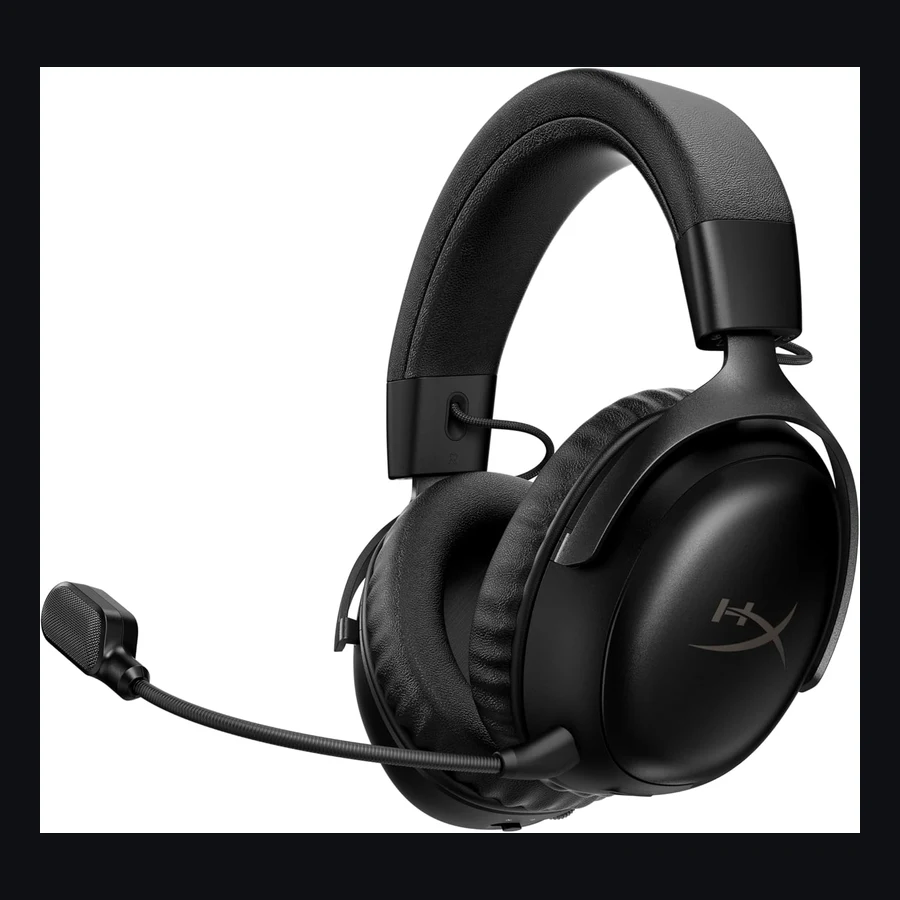
HyperX Cloud III Wireless
The flat-friendly wireless headset: closed cups, sane mic, battery that lasts a work week of evenings.
Best Mid-Range Wireless Gaming Headset?
Graphene drivers vs 53mm dynamic. Dolby Atmos vs DTS. Two 100-170 pound wireless headsets compared on sound, comfort, and mic quality.
The flat-friendly wireless headset: closed cups, sane mic, battery that lasts a work week of evenings.

Not everyone needs a 280-pound planar magnetic headset. The 100-170 pound range is where most gamers actually buy. The HyperX Cloud III Wireless and Corsair Virtuoso Pro Wireless are the two strongest contenders at this price. One prioritises battery life and comfort. The other pushes audio quality at the cost of practicality.
The Corsair Virtuoso Pro uses 50mm graphene drivers — a material that is lighter and stiffer than traditional mylar, promising lower distortion at high volumes. In practice, the Virtuoso Pro sounds crisp and detailed, with slightly recessed bass that audiophiles will appreciate and bass-heads will find lacking.
The HyperX Cloud III uses 53mm dynamic drivers tuned for gaming — elevated bass, clear midrange for footsteps and voice chat, rolled-off treble to reduce fatigue during long sessions. It does not sound as detailed as the Corsair. It sounds more fun. For gaming specifically, the HyperX tuning is the better fit.
HyperX claims 120 hours on a full charge. In testing, we got approximately 100 hours at moderate volume. The Corsair Virtuoso Pro claims 60 hours and delivered roughly 50. The HyperX needs charging once a month. The Corsair needs charging every week. For a wireless headset, battery life is a feature, and HyperX wins decisively.
The Cloud III weighs 320g with plush memory foam pads. The Virtuoso Pro weighs 370g with slightly firmer padding. After four hours, the HyperX disappears on your head. The Corsair reminds you it is there. The 50g weight difference matters more than the spec sheet suggests.
Buy HyperX Cloud III Wireless (100 pounds) — superior battery life, lighter, more comfortable for long sessions. Buy Corsair Virtuoso Pro (170 pounds) for better build quality, graphene drivers, and a more premium microphone.
The flat-friendly wireless headset: closed cups, sane mic, battery that lasts a work week of evenings. Not for audiophile open-back soundstages.
UK buyers highlight comfort and mic clarity for Discord. Themes: sound signature is gaming-V shaped (not neutral), earpad wear over a year, and wireless dongle clutter. Excellent neighbour/flat pick vs open-backs.
| mic | detachable boom |
| type | closed wireless |
| wireless | true |
HyperX Cloud III Wireless is our pick (8.5/10) vs Corsair Virtuoso Pro at 8.2/10. Graphene drivers vs 53mm dynamic. Dolby Atmos vs DTS. Two 100-170 pound wireless headsets compared on sound, comfort, and mic quality.
Around £94.39 on Amazon UK at last check (13 July 2026). Confirm on the retailer — prices move.
Choose Corsair Virtuoso Pro if you prioritise value over the overall winner (about £141.52 UK). See the score breakdown and drawbacks in the article.
Performance 40%, value 25%, build 20%, ease of use 15% — out of 10. Rankings are never sold. Full detail on our methodology page.
New versus matchups, garage-gym / gaming-room kit alerts, and deal notes. One email a week.
One email per week. Confirmation page next. Unsubscribe any time. Privacy.
Prices checked via the Amazon Creators API and may since have changed. Affiliate disclosure · How we test